PI vs Public Liability for Photographers: Which One Do You Actually Need?
At a glance
Professional Indemnity insurance covers eligible claims arising from mistakes, omissions or failures in your professional photography services.
Public Liability insurance covers eligible claims involving third-party injury or property damage caused by your business activities.
Lost images, missed shots or failed deliverables generally fall under PI, while trips, falls or accidental property damage are more relevant to Public Liability.
Photographers who work at weddings, events, studios or client premises may face both professional and physical liability risks.
The right cover depends on how you work, where you shoot, any products you supply and any insurance requirements set by clients or venues.
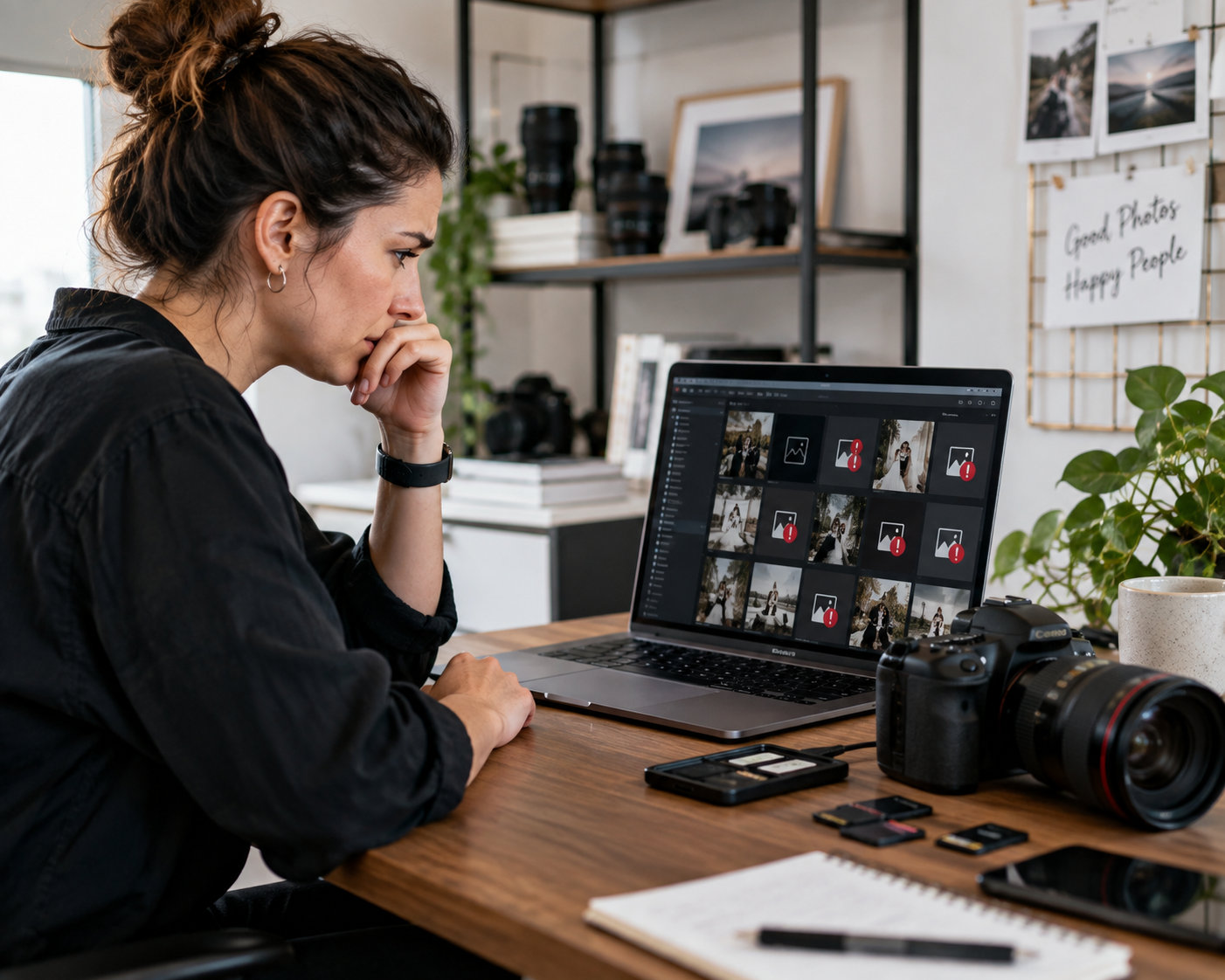
You finish photographing a wedding, but a storage failure corrupts part of the shoot and important images cannot be delivered. At another job, a guest trips over a lighting cable and injures their wrist.
Both incidents stem from your photography work, but they give rise to different claims. The first concerns the professional service you agreed to provide. The second involves physical injury arising from your business activities.
That distinction is what separates the two types of cover. Professional Indemnity (PI) generally responds to claims arising from professional mistakes, omissions or failures in your services. Public Liability generally responds when your business activities cause third-party bodily injury or property damage.
Depending on what you photograph, where you work and how you operate, you may need one or both.
What Does Professional Indemnity Insurance Cover for Photographers?
Photography is a professional service. Clients engage you to capture, preserve and deliver agreed work and a failure in that service can lead to a claim.
Loss of client material: Photographs, files or other client material are lost, corrupted or accidentally destroyed while being handled as part of your professional work.
Missed shots: Important photographs included in the agreed brief are not captured.
Failure to deliver: You are alleged to have failed to provide the photography services or deliverables agreed with the client.
Errors or omissions: An error or oversight in your professional work allegedly causes the client financial loss.
Intellectual property infringement: Your professional work unintentionally infringes copyright or other protected intellectual property, where covered by the policy.
Legal defence and investigation: Eligible costs associated with investigating and defending a covered professional claim.
Consider a wedding photographer whose hard drive fails before the photographs have been safely backed up. If irreplaceable images are lost and the couple makes a claim over the failure to deliver the agreed service, this is the type of professional exposure PI insurance is designed to address.
PI insurance is generally written on a claims-made basis. This means the policy usually needs to be active when a claim is made and notified, subject to its terms and any applicable retroactive date. The retroactive date determines how far back eligible past work may be covered, which is why maintaining continuous cover can be important.
What Does Public Liability Insurance Cover for Photographers?
Photographers also work in physical environments. Cameras, tripods, lighting stands, cables, backdrops and other equipment may be set up around clients, guests and valuable property.
Sami Insurance offers Public & Product Liability as a combined cover. Product Liability applies if you sell or supply physical products, such as framed prints or photo albums, that cause third-party injury or property damage. Cover depends on the policy wording, limits and exclusions.
PI vs Public Liability for Photographers: What Is the Difference?
The table below compares how Professional Indemnity and Public Liability insurance differ across the key risk areas for photographers.
Professional Indemnity (PI)
Public Liability (PL)
Main Risk
Professional mistakes or failures in photography services
Physical injury or property damage
Typical Claim
Lost images, missed shots or failure to deliver agreed work
Guest trips over equipment or property is damaged
Type of loss
Usually financial loss arising from professional services
Third-party bodily injury or third-party property damage
Where risk arises
From the work or deliverables you provide
From how and where you physically conduct the shoot
Policy basis
Generally claims-made
Generally occurrence-based
An occurrence-based Public Liability policy generally looks at whether the insured incident occurred during the policy period, even if the resulting claim is made later, subject to the policy wording.
Neither policy substitutes for the other. A Public Liability policy is not designed to cover a claim because wedding photos were lost. In contrast, PI insurance is not designed to replace Public Liability where someone trips over your equipment.
Do Photographers Need Both PI and Public Liability Insurance?
Whether you need both depends on how your photography business operates.
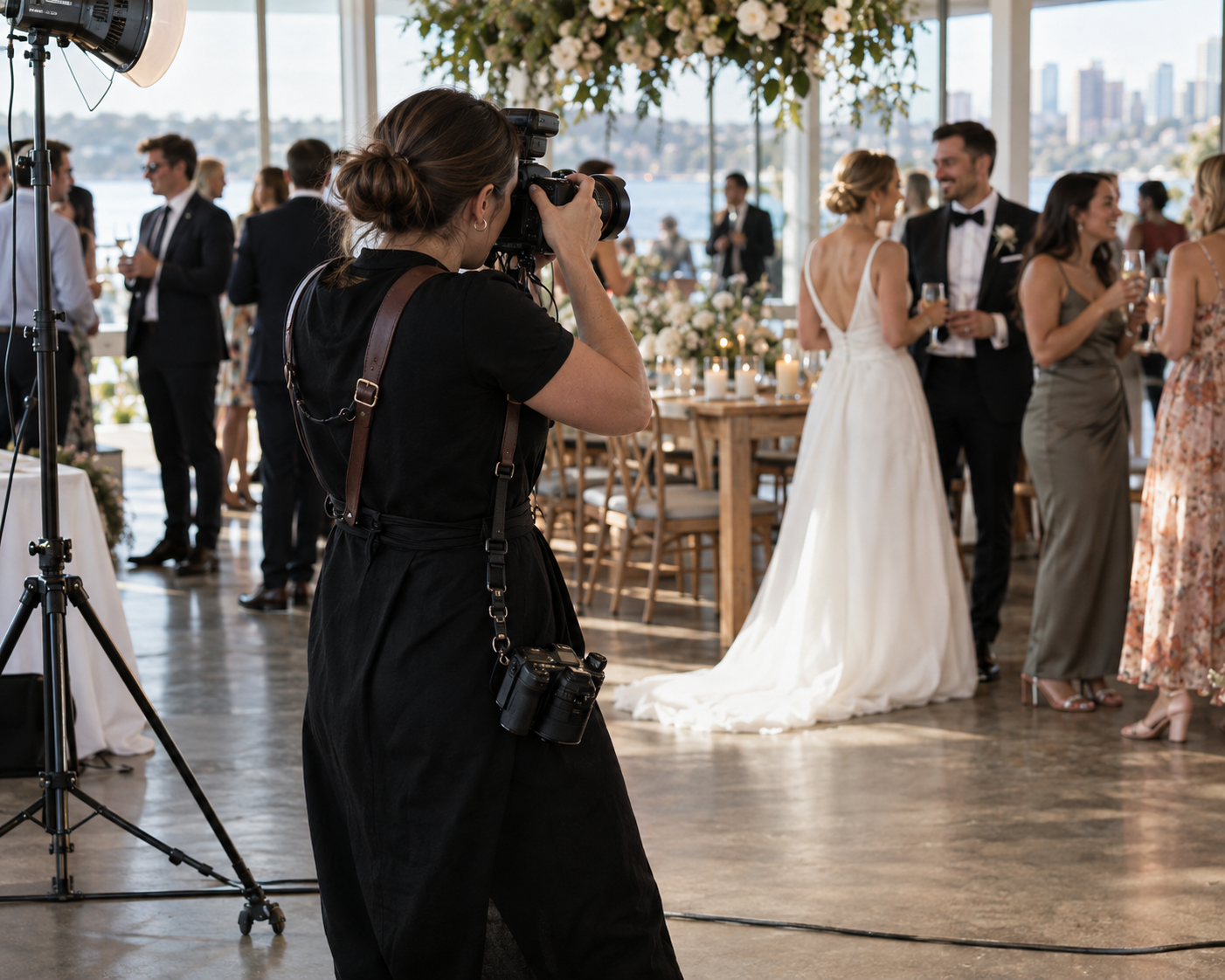
A wedding or event photographer, for example, provides a professional service while also setting up equipment around guests and venue property. That creates both professional and physical exposures, which is why photographers working at weddings and events may need more than one type of cover.
The same applies across other areas of photography:
Commercial photographers may work inside offices, retail spaces and other client premises.
Studio photographers regularly have clients or visitors entering their workspace.
Property photographers work inside homes and commercial properties owned by others.
Event photographers operate around crowds, venue staff and temporary equipment setups.
For photographers whose work involves both professional deliverables and regular work around clients, guests or third-party property, both types of cover may be relevant.
Insurance can also be a contractual requirement. A venue, commercial client or contract may require a particular level of Public Liability or other cover and ask for a Certificate of Currency before allowing you to begin work.
The right insurance for your photography business should reflect the services you provide, the environments you work in, any physical products you supply and the requirements of your clients or venues. Where both professional and physical liability exposures exist, both PI and Public Liability may be relevant.
Sami Insurance offers Professional Indemnity cover of up to $10 million and Public & Product Liability cover of up to $20 million for eligible businesses and occupations. Cover is subject to eligibility, policy terms, conditions, limits and exclusions. Get a Quick Quote onlineto explore cover for your photography business.
FAQs
Is insurance compulsory for photographers in Australia?
There is no blanket requirement for every photographer in Australia to hold PI or Public Liability insurance. However, clients, venues, event organisers or contracts may require specific cover or minimum limits before you can undertake certain work. Check the requirements applying to each engagement.
Does Public Liability insurance cover my camera equipment?
Public Liability is designed to respond to eligible third-party bodily injury and third-party property damage claims. It generally does not cover loss, theft or damage to your own cameras, lenses, lighting equipment or other business property, which may require separate cover.
Does Professional Indemnity insurance cover lost or corrupted photos?
Professional Indemnity insurance may respond where lost or corrupted photographs, missing images or another failure in your professional service leads to a client claim. Whether a particular loss is covered depends on the circumstances and the policy terms, conditions, limits and exclusions.
Written by Team Sami & Reviewed by
John David
Insurance Manager | Sami Insurance
With over 40 years of experience across the global insurance and reinsurance landscape, John David is a seasoned leader dedicated to simplifying protection for the modern workforce. As the Insurance Manager at Sami Insurance, John combines deep technical underwriting expertise with a passion for the evolving Insurtech space. John works closely with the Sami team to provide freelancers and sole traders with insurance solutions that are radically simple, transparent, and cost-effective. By leveraging cutting-edge technology and a sharp eye for detail, he helps clients navigate complex risks with a friendly, human-centric approach.
Freelance graphic designers can face two different types of business risk. A client may allege that a design error, missed specification or copyright issue caused financial loss.
A client visits your workspace and trips over a cable. At another job, you accidentally damage equipment while working at a client’s premises. If someone has been injured, the priority is to ensure they receive appropriate medical attention and to address any immediate safety risks.
As a yoga instructor, you make professional judgements every time you teach. You decide how to cue alignment, modify poses, supervise students and structure a class from one movement to the next.





.svg) The Sami Team
The Sami Team

