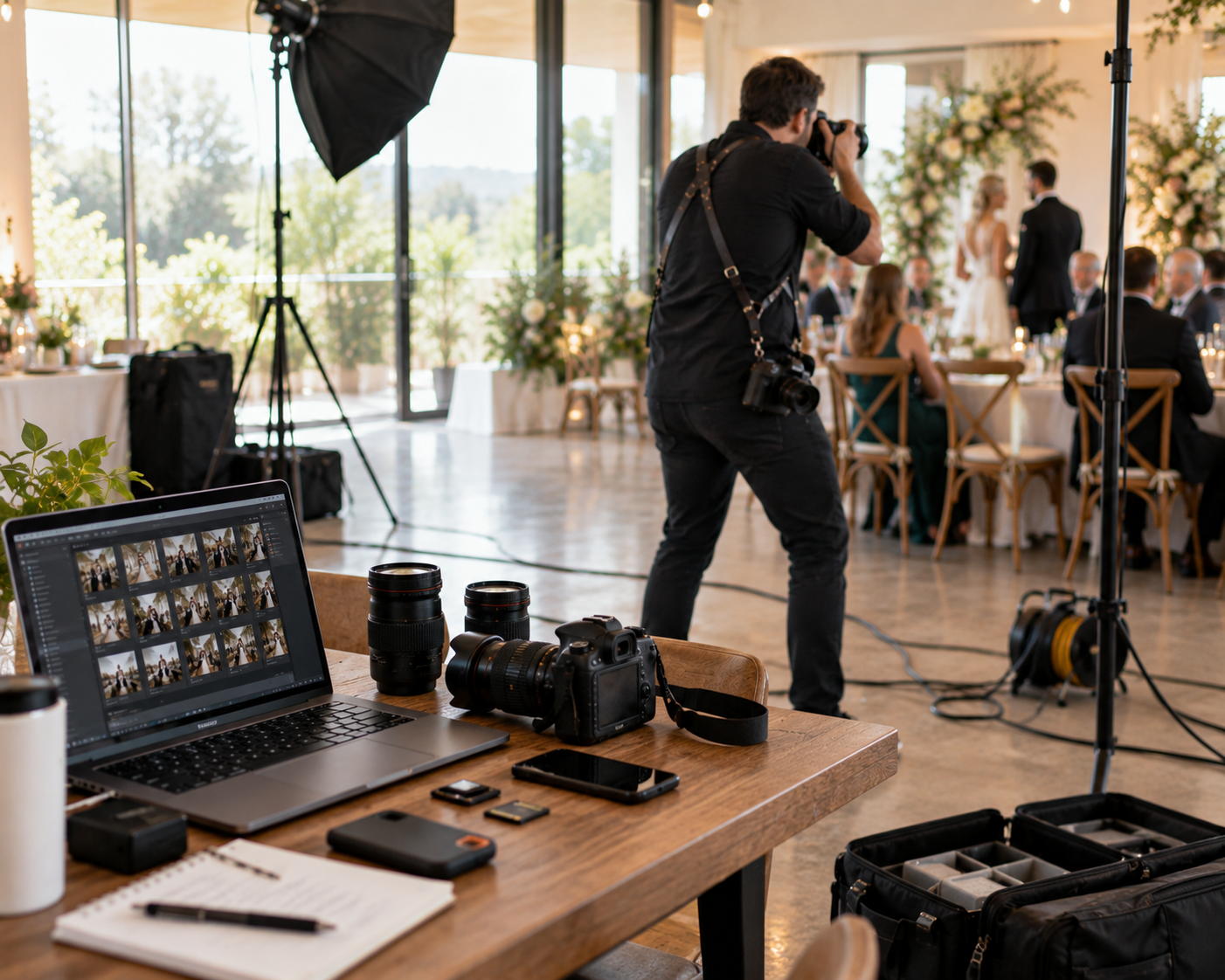
What Happens If You Work Without PI Insurance as a Photographer?
At a glance
Working without Professional Indemnity insurance does not stop a client from making a claim against your photography business.
Without applicable PI cover, you may need to fund legal defence costs and any compensation or settlement yourself.
Managing a professional claim can also take time away from shoots, editing, client work and new bookings.
Some clients, agencies and contracts may require PI insurance and proof of cover before work begins.
Taking out PI insurance after a complaint or circumstances that could lead to a claim have already arisen may be too late to cover that issue.
You complete a wedding, event or commercial shoot, but important files are corrupted, key shots are missed or the final work does not meet the client's brief. The client claims your photography service caused them financial loss and seeks compensation.
For most photographers in Australia, there is no blanket legal requirement to hold Professional Indemnity (PI) insurance, although some clients and contracts may require it. But working without cover does not prevent a client from making a claim against you.
Before looking at what working without PI insurance can mean, it helps to understand where professional risk can arise during a photography job.
Stage of Job
Example Professional Risk
Brief & booking
The agreed deliverables, number of final images, usage rights or required shots are not clearly documented before the job begins.
Planning
A required location, shot list, product detail or technical requirement in the client brief is overlooked before the shoot.
The shoot
Important images are missed, or the photographer fails to capture the specific content the client commissioned.
File handling and editing
Memory cards, hard drives or project files are accidentally deleted, corrupted or lost before the final images are delivered.
Delivery
Images are delivered late, incomplete or in a format, resolution or quantity that does not meet the agreed requirements.
Image use and licensing
A dispute arises over how images can be used, where they can be published or whether the agreed usage rights were applied as intended.
Professional indemnity insurance for photographers can respond to eligible claims arising from professional errors, omissions or alleged negligence. Without it, you may have to fund and manage a professional claim yourself, from legal defence costs to any compensation you become liable to pay.
You May Have to Fund the Cost of Defending a Claim Yourself
A client does not have to prove you were negligent before legal costs begin. Once a client makes a formal allegation, compensation demand or other claim against you, you may need legal advice to review your position and respond appropriately.
This can involve reviewing contracts, photography briefs and client correspondence, gathering evidence, responding to a letter of demand or defending a claim in formal legal proceedings.
Even if the claim is ultimately unfounded, defending your position can still involve high legal costs. Without professional indemnity insurance, you or your photography business may have to pay those defence costs.
You May Be Responsible for Compensation or Settlement Costs
The financial exposure can increase if a client establishes that your professional services caused them a loss.
For a photographer, a claim could arise from lost or corrupted images, missed agreed shots, failure to deliver work as promised or another professional error affecting the client’s intended use of the photographs.
The amount claimed may also exceed the original photography fee. For example, a commercial client could allege that missing campaign images caused additional production or marketing costs.
Without applicable PI cover, any settlement or compensation you are legally required to pay may need to come from your business funds.
Managing a Claim Yourself Can Take Time Away From Your Photography Business
The cost of a professional dispute is not limited to legal fees or compensation.
Responding to a claim can require you to locate contracts, briefs, approvals, emails, delivery records and original files. You may also need to obtain legal advice and communicate with the client or their lawyer.
For an independent photographer, that work has to fit around shoots, editing, bookings and existing client deadlines. Time spent dealing with a dispute can reduce the time available for paid work and new projects.
This operational disruption is one reason photographers should consider PI insurance, alongside the potential financial cost of a claim.
You Could Miss Out on Work That Requires PI Insurance
Some clients, agencies and contracts may require PI insurance before work begins.
A photography contract may specify a minimum PI limit, and you may be asked to provide a Certificate of Currency as evidence that the policy is active. If you need proof of cover quickly, our guide on how to get a Certificate of Currency with Sami Insurance explains how the process works.
Insurance requirements can also apply to some wedding and event photography jobs. If you are a wedding photographer, check whether an agency, commercial client or contract requires a particular PI limit or proof of cover. Venues may also have separate Public Liability insurance requirements for photographers working on-site.
If you cannot provide proof of the required cover, you may not meet the contract conditions and be unable to proceed with the booking.
Buying PI Insurance After Something Goes Wrong May Be Too Late
PI insurance generally operates on a claims-made basis, meaning the policy needs to be active when the claim is made and notified, subject to the policy terms. The retroactive date determines how far back eligible professional work may be covered.
If a client has already complained, threatened a claim or raised circumstances that could reasonably lead to one, taking out insurance afterwards does not mean that issue will be covered. Known claims or circumstances before the policy starts are generally excluded.
This is why maintaining continuous cover is important, particularly when a client could raise a claim months or years after the photography work is complete.
Not having PI insurance does not remove your potential professional liability. If a client alleges that your photography services caused them financial loss, you may still need to manage the claim and its financial impact yourself.
The professional indemnity cover you choose should reflect the photography services you provide, the types of projects you accept and any insurance requirements in your contracts. Sami Insurance offers PI insurance for eligible photographers, with cover available up to $10 million.
You can request a PI insurance quote online to see the cover options available for your photography business. Cover is subject to eligibility, policy terms, conditions, limits and exclusions.
FAQs
Does a photography contract or liability waiver protect you from a PI claim?
A written contract can define the agreed scope, deliverables, responsibilities and any limits on the photographer’s obligations. However, it does not necessarily prevent a client from making a professional negligence claim or guarantee that every limitation will apply. Clear contracts, briefs and documented approvals can still help establish what was agreed.
Does PI insurance cover second shooters or subcontractors working for a photographer?
This depends on the individual policy and how the insured business and professional activities are defined. If you engage second shooters or subcontractors to perform photography work for your business, check whether their work falls within the scope of your PI cover and whether any conditions apply.
Do you need to update your PI insurance if you change the photography services you offer?
Potentially. Your insurer should have accurate information about the photography services you provide. If you expand into areas such as weddings, events or commercial photography, check whether the change needs to be disclosed and whether your existing policy still covers those activities. Cover depends on the policy wording, eligibility requirements, limits and exclusions.
Written by Team Sami & Reviewed by
John David
Insurance Manager | Sami Insurance
With over 40 years of experience across the global insurance and reinsurance landscape, John David is a seasoned leader dedicated to simplifying protection for the modern workforce. As the Insurance Manager at Sami Insurance, John combines deep technical underwriting expertise with a passion for the evolving Insurtech space. John works closely with the Sami team to provide freelancers and sole traders with insurance solutions that are radically simple, transparent, and cost-effective. By leveraging cutting-edge technology and a sharp eye for detail, he helps clients navigate complex risks with a friendly, human-centric approach.
Yes, having appropriate business insurance can help you qualify for work with larger clients as a graphic designer, particularly when insurance is part of a client’s procurement or contract requirements.
Professional Indemnity (PI) insurance is often described as cover for claims arising from professional errors and omissions. While that is broadly true, it can create misconceptions about the types of claims a policy may actually respond to.
You finish photographing a wedding, but a storage failure corrupts part of the shoot and important images cannot be delivered. At another job, a guest trips over a lighting cable and injures their wrist.



.svg) The Sami Team
The Sami Team