"A $40,000 Mistake": How Public Liability Insurance Saved My Sole Trader Business
Ask almost any self-employed tradie, creative, or consultant why they signed up for Public Liability (PL) insurance, and you’ll usually get the same honest answer: "Because a client forced me to send them a Certificate of Currency before I could start."
When you are running a sole trader operation, insurance often feels like a pure overhead—an extra bill taking a bite out of your hard-earned margins every month.
This is until the day something actually goes wrong.
Here is how a single, ordinary workday turned into a near-disaster, and why a basic Public Liability policy was the only thing standing between my small business and personal bankruptcy.
The Incident: An Everyday Task Gone Wrong
As an independent trade contractor specializing in residential renovations, my entire livelihood relies on my hands, my tools, and my reputation. On a sunny Tuesday afternoon, I was completing a routine kitchen upgrade in a leafy Melbourne suburb.
To run power to a new set of under-cabinet lights, I needed to drill through a section of internal wall framing. I checked the plans, ran my stud finder, and prepped the area. But as the drill bit cut through the timber, I felt an unexpected resistance followed by a sudden, sickening hiss.
I hadn't hit a stud; I had pierced a high-pressure, unmapped copper water line hidden inside a non-standard cavity.
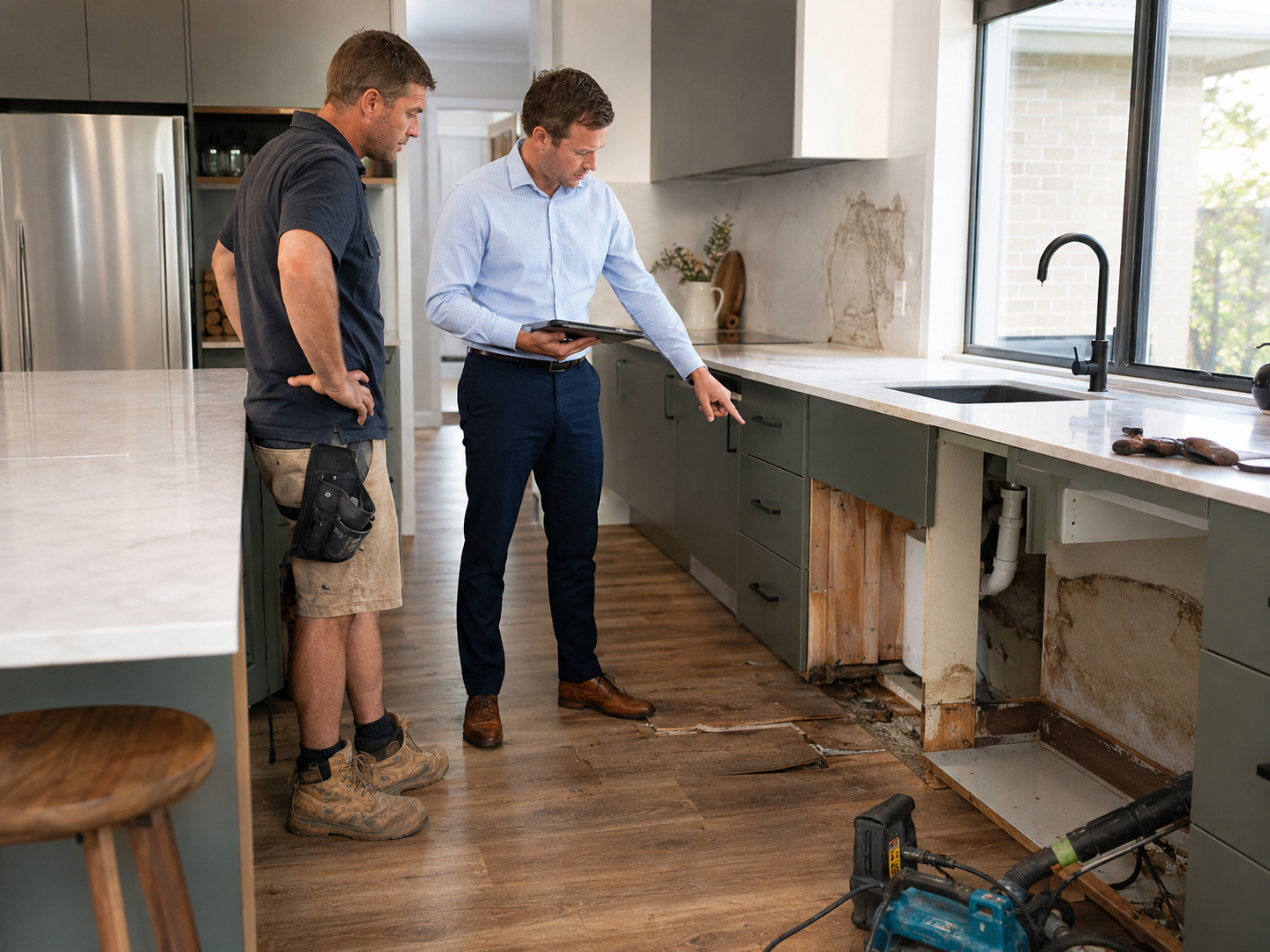
Within minutes, water was gushing through the wall cavity. By the time I managed to isolate the property’s main water shut-off valve out in the front yard, the damage was done:
Engineered Timber Flooring: Saturated, warped, and permanently ruined across the kitchen and living room.
Custom Cabinetry: The lower units absorbed water instantly, swelling beyond repair.
Downstairs Apartment: The water had seeped through the subfloor, ruining the ceiling plaster and custom lighting of the unit below.
THE FINANCIAL CRISIS IN NUMBERS
Emergency Plumbing & Fix:
$2,400
Floorboards Replacement & Restoration:
$18,500
Custom Cabinetry Remaking:
$9,200
Downstairs Ceiling & Electrical Repairs.
$11,800
TOTAL THIRD-PARTY DAMAGE:
$41,900
The Sole Trader Reality Check
When you trade under a Proprietary Limited (Pty Ltd) structure, a corporate structure offers a degree of separation between business debt and personal assets. As a sole trader, that safety net does not exist.
A $41,900 bill isn't just a business expense; it is a personal debt. If I couldn't pay, the homeowner’s property insurer would pursue me directly. That meant my personal assets were on the chopping block.
I was looking at wiping out three years of business savings in a single afternoon.
How the Claims Process Saved the Day
Panicked, I called my insurer from the drive way while waiting for the emergency plumber. That single phone call completely changed the outcome:
1. Instant Assessment & Damage Control
My insurer assigned a loss adjuster to the case within 24 hours. They managed the communication directly with the stressed homeowner and the downstairs neighbour, removing me from an incredibly tense, high-pressure negotiation.
2. Legal and Investigation Support
Because the pipe was unmapped and installed against standard plumbing code depth, there was an initial debate over who was at fault. My PL policy covered the legal fees and expert inspection required to assess the property layout—saving me thousands in upfront legal fees.
3.Settlement Without Personal Ruin
Ultimately, because the damage occurred directly as a result of my work activities on a third-party property, the claim was approved under my Public Liability policy.
Total Payout: $41,900 paid directly to the affected parties.
My Out-of-Pocket Expense: A $500 policy excess.
WITHOUT INSURANCE: $41,900 Out of Pocket, Personal Savings Lost, Potential Bankruptcy of my Business.
WITH INSURANCE: $500 Policy Excess, My Business Keeps Trading, Insurer Handles the Case Including the Legal Battles.
Lessons Every Sole Trader Should Know
Looking back, paying a low annual amount for my Public Liability insurance was the single smartest investment I ever made for my business. If you operate as a sole trader in any industry, keep these key lessons in mind:
Accidents Happen to Professionals: You can be the most careful, experienced operator in your field, but hazards, or a momentary lapse in concentration can happen to anyone.
Third-Party Property Belongs to Others: Whether you work off site, inside people's homes, in a rented office, or at a local community market, you are surrounded by third-party property that may be expensive to fix.
PL Insurance Buys Peace of Mind: Knowing that a mistake won’t bankrupt you or your family, allows you to focus on growing your business rather than stressing over "what-ifs."
Public Liability insurance isn’t just a piece of paper you send off to win client tenders. It is the safety net protecting your personal life from your business activities.
Written by Team Sami & Reviewed by
John David
Insurance Manager | Sami Insurance
With over 40 years of experience across the global insurance and reinsurance landscape, John David is a seasoned leader dedicated to simplifying protection for the modern workforce. As the Insurance Manager at Sami Insurance, John combines deep technical underwriting expertise with a passion for the evolving Insurtech space. John works closely with the Sami team to provide freelancers and sole traders with insurance solutions that are radically simple, transparent, and cost-effective. By leveraging cutting-edge technology and a sharp eye for detail, he helps clients navigate complex risks with a friendly, human-centric approach.
Yes, having appropriate business insurance can help you qualify for work with larger clients as a graphic designer, particularly when insurance is part of a client’s procurement or contract requirements.
You complete a wedding, event or commercial shoot, but important files are corrupted, key shots are missed or the final work does not meet the client's brief.
Professional Indemnity (PI) insurance is often described as cover for claims arising from professional errors and omissions. While that is broadly true, it can create misconceptions about the types of claims a policy may actually respond to.





.svg) The Sami Team
The Sami Team