Public & Product Liability VS Professional Indemnity Insurance: What's The Difference?
At a glance
Public & Product Liability insurance covers third-party bodily injury or third-party property damage claims arising from your business activities or products.
Professional Indemnity insurance responds to claims alleging that your advice, services or expertise caused a client financial loss.
The key distinction is the type of risk involved: physical injury or property damage versus financial loss.
Professional Indemnity is generally written on a claims-made basis, while Public & Product Liability is on an occurrence basis.
Many businesses face both types of risk, making it important to determine whether a single policy or both are relevant to your work.
Say you run a business coaching practice. During a workshop, a client trips over a cable and injures their wrist. Months later, another client claims the growth strategy you recommended caused them a $60,000 financial loss. Same business. Two incidents. Two entirely different risks.
The injury claim is generally a Public & Product Liability matter. The financial loss claim is generally a Professional Indemnity matter. If you only hold one type of cover, the other risk may fall outside the scope of your policy.
Understanding that distinction is important because many small business owners assume liability insurance is a single product. In reality, Public & Product Liability and Professional Indemnity are designed to respond to different types of claims and relying on one does not automatically mean you are protected against the other.
In this article, we explain what each policy typically covers, how they differ, when you may need one or both and the key considerations when choosing between these two business insurance policies.
What is Professional Indemnity Insurance?
Professional Indemnity (PI) insurance is designed for businesses that provide advice, services or expertise to clients. If a client alleges that your work, recommendation or professional service caused them financial loss, PI insurance may help cover the costs of responding to the claim, subject to the policy terms and conditions.
Claims do not always arise because a professional deliberately did something wrong. A misunderstanding, oversight or alleged mistake can still result in a client seeking compensation. Even if the allegations are ultimately unfounded, responding to a claim can involve legal costs, time and disruption to your business.
While the exact scope depends on the policy, PI insurance typically responds to claims arising from situations such as:
Negligence in professional services
Errors and omissions
Breach of professional duty
Intellectual property infringement
Defamation claims arising from your professional services
Legal defence costs arising from covered claims
PI insurance does not cover every type of claim. Understanding what falls outside the policy is just as important as knowing what is included. For a detailed breakdown of inclusions, exclusions, costs and key policy considerations, read our complete guide to Professional Indemnity insurance.
What is Public & Product Liability Insurance?
Public & Product Liability (PL) insurance protects businesses against claims involving bodily injury or property damage arising from their business activities or the products they supply, subject to the policy terms and conditions. Understanding how they work individually helps explain why they are so commonly held together.
Public Liability insurance responds to claims where a third party, such as a client, customer or member of the public, alleges that your business activities caused them bodily injury or damaged their property. The incident may occur at your premises, at a client's site or anywhere your business operates.
Product Liability insurance, on the other hand, responds to claims arising from products your business sells, supplies, manufactures or distributes. If a product causes injury or property damage after it leaves your control, this cover may respond regardless of where the product was supplied, subject to the policy terms and conditions.
Differences Between Public and Product Liability and Professional Indemnity Insurance
Both policies protect your business from the financial impact of a claim, but they are designed to respond to different risks. The table below outlines the key differences between Professional Indemnity and Public & Product Liability insurance across several important categories.
Category
Professional Indemnity
Public & Product Liability
What triggers a claim
Client alleges financial loss from your advice, error or omission.
Third party suffers bodily injury or property damage from your activities or products.
Fitness professionals,
tradespeople, retailers, event operators and businesses interacting with the public.
Example Scenario
A business consultant gives strategic advice; the client loses $80,000 and sues for negligence.
A yoga teacher's client trips on equipment at a session and injures their wrist.
Policy basis
Claims-made.
Occurrence-based.
Maximum cover by Sami Insurance
Up to $10,000,000.
Up to $20,000,000.
The type of risk determines which policy applies. A client who follows your advice and suffers a financial loss is generally a Professional Indemnity matter. A client who is physically injured on your premises or has property damaged due to your business activities is generally a Public & Product Liability matter.
Another important difference is how the policies operate. PI insurance is generally written on a claims-made basis, meaning the policy must be active when a claim is made against you. This is why maintaining continuous cover is important. PL insurance is generally written on an occurrence basis, meaning it responds to incidents that occur during the policy period, even if the claim is reported later.
PI insurance is commonly associated with advice-based professions such as consultants, coaches, designers and accountants, as well as other professionals whose clients rely on their expertise. PL insurance is more commonly associated with businesses that interact with customers, operate from premises, work on-site or supply products.
How to Choose the Right Cover for Your Business
Understanding the difference between the two policies is a useful starting point, but the more important question is which one actually applies to your business, and that comes down to what your work involves.
If you provide advice, develop strategies or deliver services that clients rely on to make financial or operational decisions, Professional Indemnity insurance may be relevant.
If you interact with clients or the public, work on-site, attend events or supply products, Public & Product Liability insurance may be relevant.
If both descriptions apply to your business, holding both covers may be worth considering.
Beyond your own assessment, check what your contracts and clients require. Many commercial engagements, venues and supplier agreements specify minimum levels of cover before work can begin. A Certificate of Currency, which confirms your policy is active, is often requested as proof of insurance.
It is also worth considering your realistic worst-case exposure. For PI, consider the extent of financial loss a client could reasonably attribute to your advice or services. For PL, consider the nature of your business activities, the type of products you supply, your level of public interaction and any contractual cover requirements.
At Sami Insurance, we understand that choosing between Professional Indemnity and Public & Product Liability insurance is not always straightforward. The right cover depends on how your business operates, the services you provide and the risks you face.
We offer a streamlined online quoting process tailored to your occupation and business size, with cover available across more than 800 professions. You can receive a Quick Quote and obtain a Certificate of Currency immediately after purchasing cover.
If you are still unsure which cover is right for your business, get in touch with us to discuss your options.
FAQs
Which insurance should I get first, PI or PL?
Start with whichever cover your work most immediately requires, or what your contracts, clients or venues specify. If both apply to your business, holding PI and PL together can help address different types of business risk when a single policy may not provide enough coverage.
Does working from home mean I don't need Public & Product Liability insurance?
Not necessarily. If clients visit your home office, a claim can still arise if they get injured on your property. If you sell products at markets, pop-up stalls or industry events, liability follows the product, not the location you work from. Any product you manufacture or supply can cause injury or damage after it leaves your control, regardless of where your business is based.
Does my client or contract determine which insurance I need?
In some cases, yes. Many clients, venues, councils and commercial contracts specify minimum insurance requirements before work can begin. These requirements may include Professional Indemnity insurance, Public & Product Liability insurance, or both. Reviewing contractual obligations before accepting work can help ensure you hold the cover expected for the engagement.
Written by Team Sami & Reviewed by
John David
Insurance Manager | Sami Insurance
With over 40 years of experience across the global insurance and reinsurance landscape, John David is a seasoned leader dedicated to simplifying protection for the modern workforce. As the Insurance Manager at Sami Insurance, John combines deep technical underwriting expertise with a passion for the evolving Insurtech space. John works closely with the Sami team to provide freelancers and sole traders with insurance solutions that are radically simple, transparent, and cost-effective. By leveraging cutting-edge technology and a sharp eye for detail, he helps clients navigate complex risks with a friendly, human-centric approach.
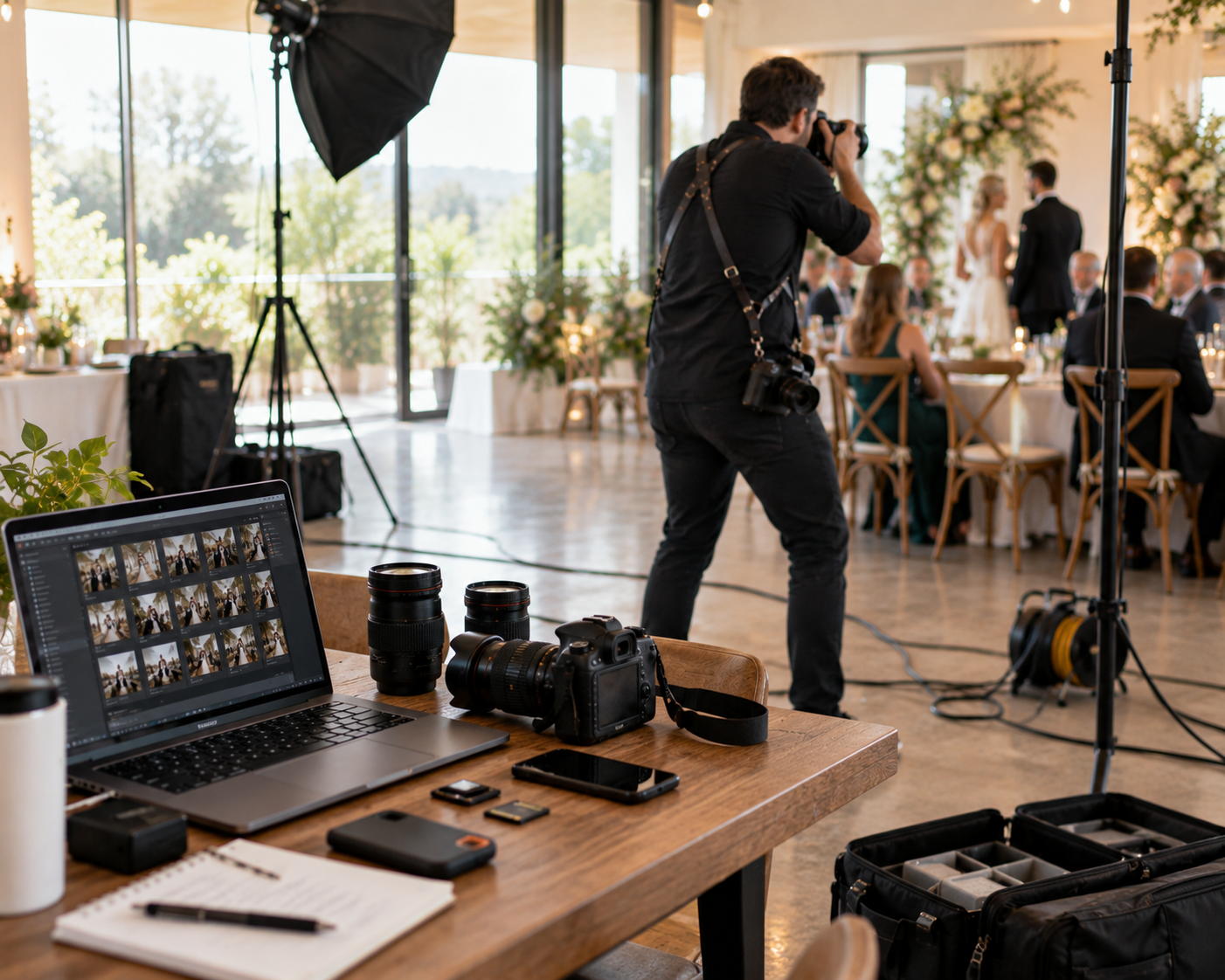
You finish photographing a wedding, but a storage failure corrupts part of the shoot and important images cannot be delivered. At another job, a guest trips over a lighting cable and injures their wrist.
Freelance graphic designers can face two different types of business risk. A client may allege that a design error, missed specification or copyright issue caused financial loss.
A client visits your workspace and trips over a cable. At another job, you accidentally damage equipment while working at a client’s premises. If someone has been injured, the priority is to ensure they receive appropriate medical attention and to address any immediate safety risks.





.svg) The Sami Team
The Sami Team