What Are the Most Common Product Liability Claims In Australia?
At a glance
Manufacturing defect claims arise when an error during production, assembly or packaging makes a product unsafe.
Design defect claims involve products that are unsafe even when they are made exactly as intended.
Inadequate warning claims can arise when missing or unclear safety information contributes to injury or property damage.
Misleading product claims may create liability when inaccurate statements about safety or performance lead to injury or property damage.
A Product Liability claim can arise when a product a business manufactures, imports, sells, supplies, installs or repairs allegedly causes bodily injury, illness or damage to someone else’s property. This could involve contaminated food making a customer sick, a faulty appliance starting a fire or a product breaking and injuring the person using it.
Under the Australian Product Safety Law, goods have a safety defect when they do not provide the level of safety the public is generally entitled to expect. Product design and manufacturing are not the only factors considered. Packaging, marketing, warnings, instructions and how the product could reasonably be used may also affect whether it is considered safe. A customer does not need to prove the business was careless. They only need to show that the product did not meet the level of safety it was reasonably expected to provide.
Understanding the most common type of product liability claims in Australia can help businesses identify risks before their products reach customers.
Manufacturing Defects
A manufacturing defect occurs when a product is not made the way it was designed to be. The design itself may be safe, but an error during production, assembly, processing or packaging can leave a particular item or batch different from how it was intended to be made.
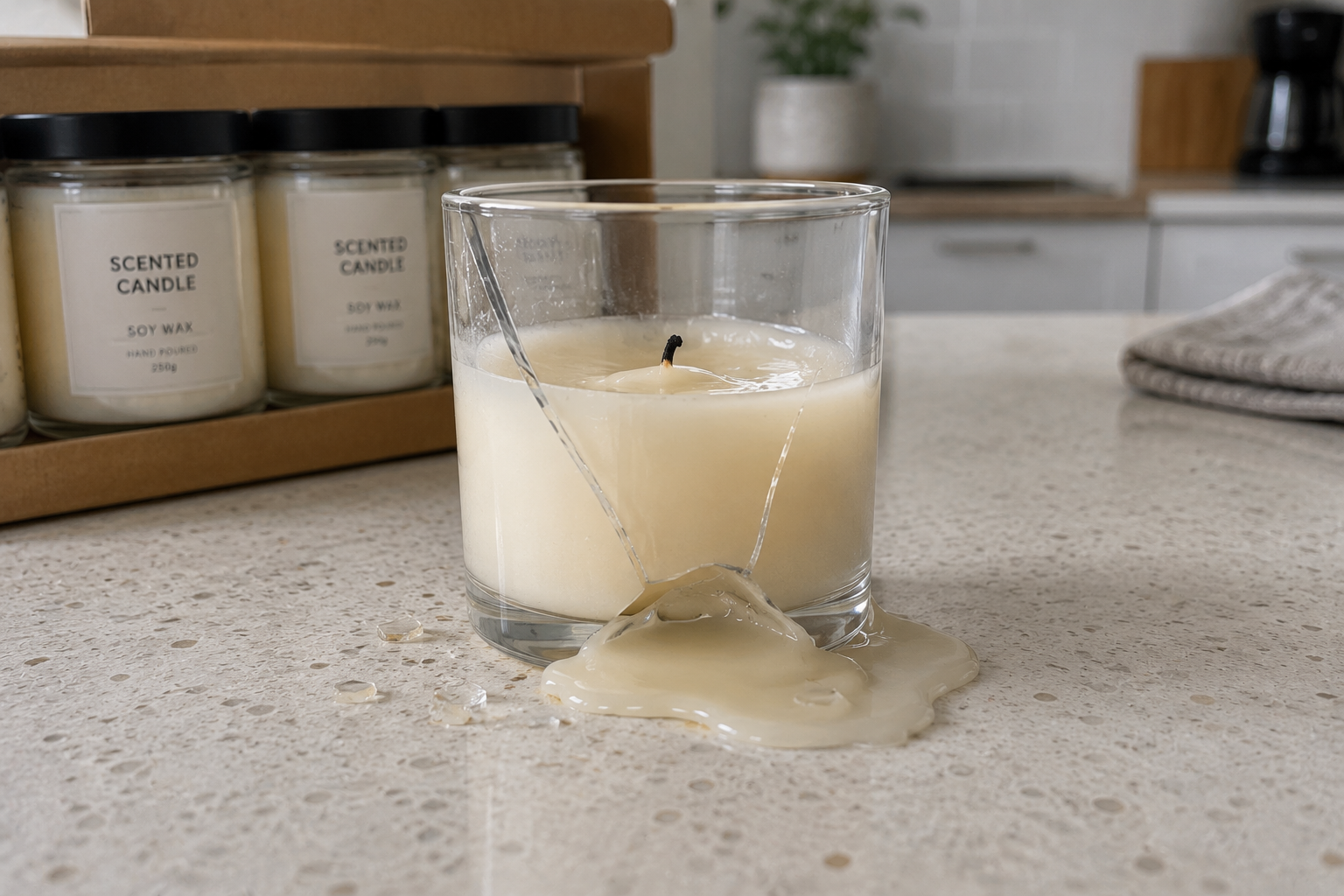
This could result from a faulty component, incorrect assembly, contaminated ingredients, foreign matter entering a product or inadequate quality control. For example, a candle maker might sell hundreds of candles without issue, but one batch could be made with the wicks positioned too close to the glass. The uneven heat could crack the container, causing the hot wax to damage a customer’s benchtop. Likewise, a furniture maker could send out a table with one leg incorrectly bolted, causing it to collapse during normal use.
If the affected product causes someone to become ill or injured, or damages their property, the business may face a Product Liability claim. This can happen even if the business did not know the product was unsafe when it was supplied.
Design Defects
A design defect is different from a manufacturing defect. The product may be made exactly as intended, but the problem still occurs because the design itself was unsafe from the beginning. Every unit made to that design could therefore carry the same risk.
For example, a children’s toy could be designed with small parts that detach easily, creating a choking hazard. A furniture maker could produce a stool with a base that is too narrow to remain stable, causing it to tip when someone sits on it normally. In both cases, the product may match its intended design, but it does not provide the level of safety a customer would reasonably expect.
If a design fault on a product contributes to someone being injured or causes damage to their property, the manufacturer or another business involved in supplying the product may face a claim. Whether the product has a design defect may depend on whether it was safe for its expected use, who was likely to use it and whether a safer design could reasonably have reduced the risk.
Inadequate Warnings or Instructions
A product may be designed and manufactured correctly, but still be unsafe if customers are not given the correct information needed to use, assemble or store it safely. Missing, unclear or inaccurate warnings can prevent someone from understanding a risk that may not be obvious from looking at the product.
For example, packaged food could contain an allergen not declared on the label, causing a customer to have an allergic reaction. A cleaning product might not warn users that mixing it with another chemical can produce harmful fumes. A business supplying electrical equipment without clear operating instructions may also face a claim if a customer is injured while using it in a foreseeable way that the instructions failed to address.
Whether the information was adequate may depend on what risks the product carried, who was likely to use it, how it could reasonably be used and whether the warning or instruction was clear and easy to find.
Misleading Product Claims
A misleading product claim arises when a product does not match a statement made about its safety, strength, capacity, ingredients or suitability. The product may be made as intended, but the customer uses or buys it relying on information that turns out to be inaccurate.
For example, a ladder advertised as supporting a particular weight could collapse when used below that limit, injuring the user. Protective gloves promoted as resistant to a particular chemical could fail and cause burns. A cleaning product described as safe for timber could damage a customer’s flooring when used as directed. In each case, the problem is the gap between what the business claimed and how the product actually performed.
Not every misleading statement results in a Product Liability claim. If the product simply fails to deliver a promised benefit, the issue may involve a refund, warranty or other rights under the Australian Consumer Law. A Product Liability claim can arise when the inaccurate statement contributes to bodily injury, illness or damage to someone else's property.
Product Liability claims do not arise only when a product is obviously faulty. A problem with its manufacture, design, warnings or marketing can lead to bodily injury, illness or damage to someone else’s property. Understanding these risks can help businesses improve quality controls, review product information and recognise where insurance may be needed.
If your business manufactures, imports, sells, supplies, installs or repairs physical products, Sami Insurance offers Public & Product Liability Insurance with cover options up to $20 million, subject to eligibility, policy terms, conditions, limits and exclusions.
Get a tailored quote online to see the cover available for your occupation and business activities.
FAQs
Is Product Liability insurance compulsory in Australia?
Product Liability insurance is not legally compulsory for most Australian businesses. However, a client, landlord, venue, supplier agreement, industry body or commercial contract may require a business to hold it. Even when it is not mandatory, businesses that manufacture, import, sell, supply, install or repair physical products may need cover because those products could cause bodily injury or property damage.
Can a business face a Product Liability claim if it did not manufacture the product?
Yes. Depending on its role and the circumstances, a business that imports, sells, distributes, installs, alters, repairs or places its own branding on a product may face a claim if that product causes bodily injury, illness or property damage. Under the Australian Consumer Law, an importer may also be treated as the manufacturer when the overseas manufacturer has no place of business in Australia.
Does Product Liability insurance cover recalling or replacing a faulty product?
Product Liability insurance generally focuses on claims related to third-party bodily injury or property damage caused by a supplied product. It generally does not cover the cost of recalling, repairing, refunding or replacing the faulty product itself.
Written by Team Sami & Reviewed by
John David
Insurance Manager | Sami Insurance
With over 40 years of experience across the global insurance and reinsurance landscape, John David is a seasoned leader dedicated to simplifying protection for the modern workforce. As the Insurance Manager at Sami Insurance, John combines deep technical underwriting expertise with a passion for the evolving Insurtech space. John works closely with the Sami team to provide freelancers and sole traders with insurance solutions that are radically simple, transparent, and cost-effective. By leveraging cutting-edge technology and a sharp eye for detail, he helps clients navigate complex risks with a friendly, human-centric approach.
You finish photographing a wedding, but a storage failure corrupts part of the shoot and important images cannot be delivered. At another job, a guest trips over a lighting cable and injures their wrist.
Freelance graphic designers can face two different types of business risk. A client may allege that a design error, missed specification or copyright issue caused financial loss.
A client visits your workspace and trips over a cable. At another job, you accidentally damage equipment while working at a client’s premises. If someone has been injured, the priority is to ensure they receive appropriate medical attention and to address any immediate safety risks.




.svg) The Sami Team
The Sami Team