How Much Does Public and Product Liability Insurance Cost?
At a glance
Public & Product Liability insurance costs vary from one business to another.
Sami’s PL cover starts from approximately $3 per week for eligible occupations, subject to policy terms, conditions, limits and exclusions.
Your premium can change based on business activities, turnover, products supplied, cover limit and location.
More public interaction, product exposure or site-based work can increase the premium compared to lower-contact businesses.
Running your own business means taking responsibility for more than the work you deliver. Whether you teach classes, meet clients, attend events, visit job sites or sell products, there is always a chance someone could claim your business caused injury or property damage.
Public & Product Liability (PL) insurance is designed to respond to exactly that kind of risk. But how much does it cost in Australia, and why do premiums vary from one business to another?
The answer usually comes down to how the business operates. A yoga teacher running classes at a community centre, a photographer shooting on location and a business selling products online can each carry different liability risks.
This guide breaks down what affects the cost, how premiums are calculated and what to check before choosing cover.
How Much Does Public & Product Liability Insurance Cost in Australia?
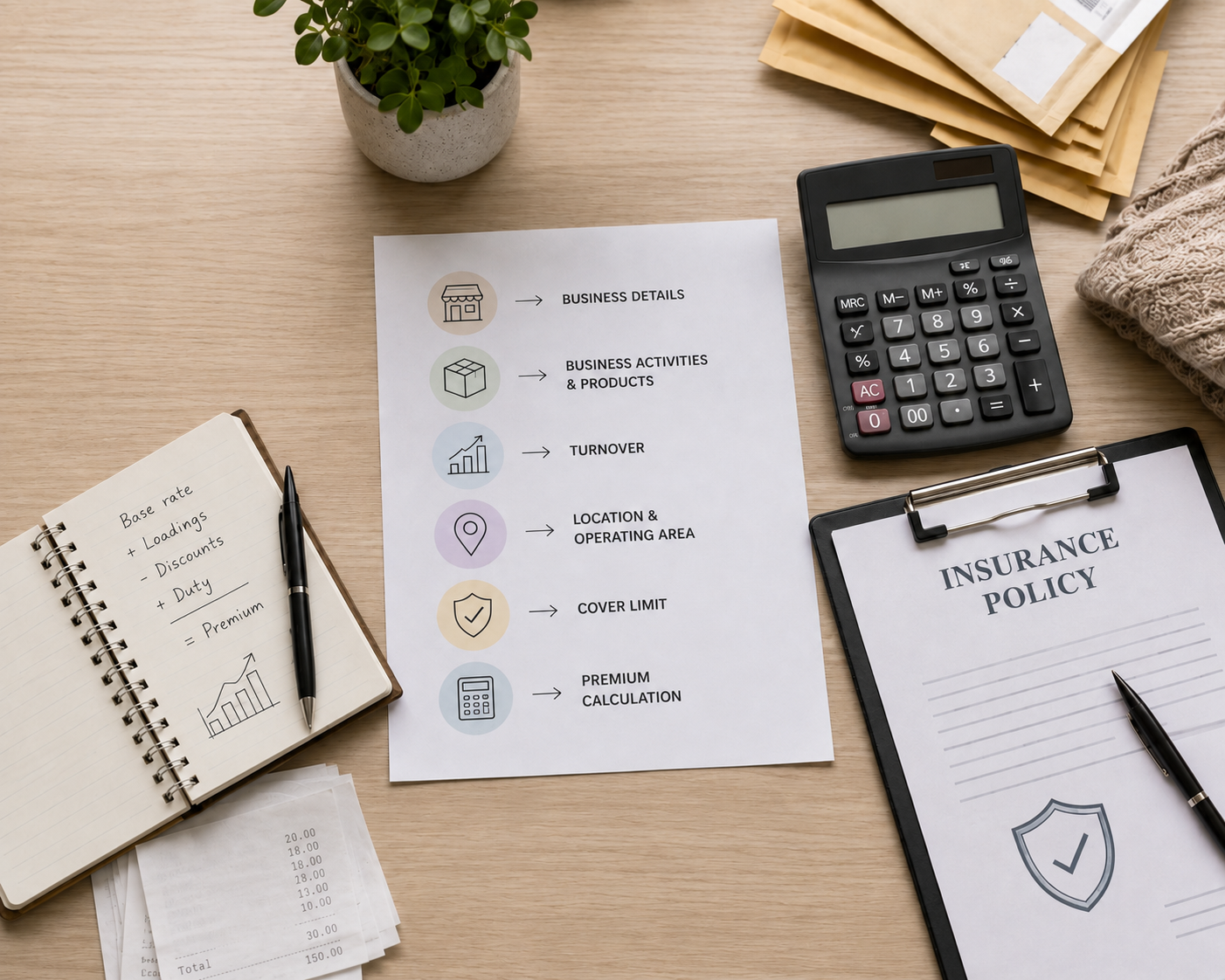
PL insurance costs vary because insurers price cover based on business risk, not on a single flat rate. Your occupation, turnover, business activities, products supplied, selected cover limit and location can all affect the final premium.
Sami offers PL insurance starting at approximately $3 per week for eligible occupations, subject to policy terms, conditions, limits and exclusions. Starting prices can also differ by occupation. For example, selected cover may start at around $2 per week for business coaching, $3 per week for yoga instructors and $5 per week for photographers and graphic designers.
These figures are indicative starting points based on selected occupations and cover options. Actual premiums depend on individual business circumstances, including occupation, turnover, products supplied, cover limit, location and policy terms.
Factors Affecting Public & Product Liability Insurance Cost
The premium usually depends on your business, the cover you choose and the insurer’s eligibility requirements.
Business Activities
Hands-on, client-facing or site-based work generally carries different risks from office-based or online work. A yoga teacher running in-person classes, a photographer working at events or a consultant hosting workshops may have more public-facing exposure than someone working entirely online.
Insurers assess the nature of the work, not just the job title. The more contact your business has with the public, third-party property or venues, the more that exposure can affect your premium.
Products You Sell or Supply
Products can affect your premium because they create risk beyond your general business activities. If a product allegedly injures someone or damages property, the insurer may assess that differently from a claim linked to a class, event, client visit or job site.
For example, a photographer selling printed albums may carry different product risk from a retailer selling skincare, candles or food items. Product type, use case and sales volume can all influence insurance pricing.
If your business sells, supplies or distributes products, your premium may reflect that risk. Cover still depends on the policy wording and eligibility requirements.
Annual Turnover
Turnover is a common basis for calculating PL premiums because it reflects the scale of business activity. Higher turnover can mean more jobs, more clients or more products supplied, which can increase exposure to potential claims.
A small business earning $60,000 a year carries a different risk profile to one turning over $600,000, and premiums can reflect that difference.
The cover limit is the maximum amount the policy may pay for an eligible claim, subject to the policy wording. Higher limits may increase the premium because the insurer is accepting a larger potential claim amount.
Sami offers PL cover of up to $20 million. The right limit may depend on your contracts, venue hire agreements, leases, council requirements or client expectations.
Your Location and Operating Area
Where your business operates can also affect the final cost. State and territory duties can change the total premium, and the places you work from can also shape the risk.
A home-based business, shared studio, rented venue, market stall and client-site business may each create different exposure. Location is rarely the only pricing factor, but it is part of the overall picture.
How Are Public & Product Liability Insurance Premiums Calculated?
There is no single formula that applies to every quote. Each insurer uses its own rating model, underwriting rules and eligibility criteria.
That said, premiums are generally based on the risk associated with the business.
Note: The following steps use hypothetical figures to illustrate how an insurer might approach premium calculation. The base rate, loadings, discounts and duty rates shown are for illustrative purposes only and do not represent actual industry rates, Sami's pricing model or any specific quote. Actual premiums depend on many considerations, including the insurer, occupation, turnover, products supplied, cover limit, location, policy terms, etc.
Step 1: Classify the Business Activity
The first thing an insurer looks at is what the business actually does. A photographer, yoga teacher, consultant, market stallholder and food product business may all need PL insurance, but they do not carry the same risk.
A business that sells food products may have product liability exposure because a supplied product could allegedly cause injury or illness. A yoga teacher may carry more public liability exposure because students attend classes in person.
Different business activities can lead to different premium outcomes, even in the same industry or occupation.
Step 2: Apply a Rating Basis
Once the business activity is understood, the insurer may apply a rating basis. This could be annual turnover, payroll, floor area, the number of events or another measure that reflects the scale of the business's exposure.
The actual rate depends on the insurer, occupation and policy terms.
Step 3: Add Risk Loadings or Discounts
The insurer may then adjust the base premium based on the business details.
Example adjustments:
Base risk premium: $150
Product exposure loading: +25%
In-person public interaction loading: +20%
Documented safety procedures discount: -10%
Net adjustment: 25% + 20% - 10% = 35%
Adjusted premium: $150 × 1.35 = $202.50
Step 4: Factor in the Cover Limit
The selected cover limit can also affect the premium. A higher limit means the insurer is accepting a greater potential claim amount, which is reflected in the premium as well.
The increase is not always direct. Doubling the cover limit does not automatically double the premium. The impact depends on the insurer’s rating model and the policy selected.
Step 5: Add GST and Any Applicable Insurance Duty
Once the insurer has calculated the premium, GST and any applicable state or territory government charges, such as insurance duty, may be added to the final payable amount. These charges can affect the total cost shown on a quote, but they do not usually change how the insurer assesses the underlying business risk.
Using the example above:
Adjusted premium: $202.50
GST at 10%: $20.25
Subtotal including GST: $222.75
If insurance duty applies, it may be added in accordance with the relevant state or territory rules.
NSW insurance duty at 9%: $222.75 × 9% = $20.05
Annual amount payable: $202.50 + $20.25 + $20.05 = $242.80 per year
Some small businesses in NSW may also be eligible for a stamp duty exemption on PL insurance, subject to eligibility requirements.
Two Businesses, Different Premiums
A freelance graphic designer and a market stallholder may choose the same cover limit but receive different premiums. The designer may have limited public interaction and no physical products. The stallholder deals with customers in person and sells physical goods.
That is why price alone does not tell the full story. Cover limit, included activities, exclusions and how closely the policy matches the way the business operates all play a role.
Choosing Cover Based on Your Business Risk
PL insurance costs depend on your business, not on a flat weekly rate.
If you are comparing PL insurance or reviewing your existing cover, a cheaper policy is not always the better fit if it does not reflect where you work, who you interact with or what you sell.
PL insurance is not legally required for every Australian business. However, you may need it to meet contract, lease, venue, council, market or client requirements. For example, a market organiser may ask for a Certificate of Currency before you trade or a studio may require proof of cover before you run classes. If you sell products, meet clients or work in public-facing settings, check which requirements apply to your business before choosing cover.
Do graphic designers need both PL and Professional Indemnity (PI) insurance?
Some graphic designers may need both, depending on how they work. PL insurance generally responds to third-party injury or property damage claims, which apply if a client visits your studio or you work at a venue. PI insurance responds to claims arising from professional services, advice or design work. Our guide on Professional Indemnity and Public & Product Liability insurance for graphic designers covers where each type applies for design businesses.
Written by Team Sami & Reviewed by
John David
Insurance Manager | Sami Insurance
With over 40 years of experience across the global insurance and reinsurance landscape, John David is a seasoned leader dedicated to simplifying protection for the modern workforce. As the Insurance Manager at Sami Insurance, John combines deep technical underwriting expertise with a passion for the evolving Insurtech space. John works closely with the Sami team to provide freelancers and sole traders with insurance solutions that are radically simple, transparent, and cost-effective. By leveraging cutting-edge technology and a sharp eye for detail, he helps clients navigate complex risks with a friendly, human-centric approach.
You finish photographing a wedding, but a storage failure corrupts part of the shoot and important images cannot be delivered. At another job, a guest trips over a lighting cable and injures their wrist.
Freelance graphic designers can face two different types of business risk. A client may allege that a design error, missed specification or copyright issue caused financial loss.
A client visits your workspace and trips over a cable. At another job, you accidentally damage equipment while working at a client’s premises. If someone has been injured, the priority is to ensure they receive appropriate medical attention and to address any immediate safety risks.




.svg) The Sami Team
The Sami Team